
Stabilize The System Before Explaining It
Confirm user impact, affected functions, start time, and current trend. Assign one incident lead and establish a shared log of decisions. If a known-safe rollback, feature flag, or traffic shift can reduce harm, use it before searching for a perfect root cause. Preserve logs and relevant state before they expire.
Containment should be reversible and measurable. Disabling an optional feature may protect the core journey. Increasing capacity can buy time, but it may hide a leak or overload dependency. Communicate what is observed, what is assumed, and what will be tried next.
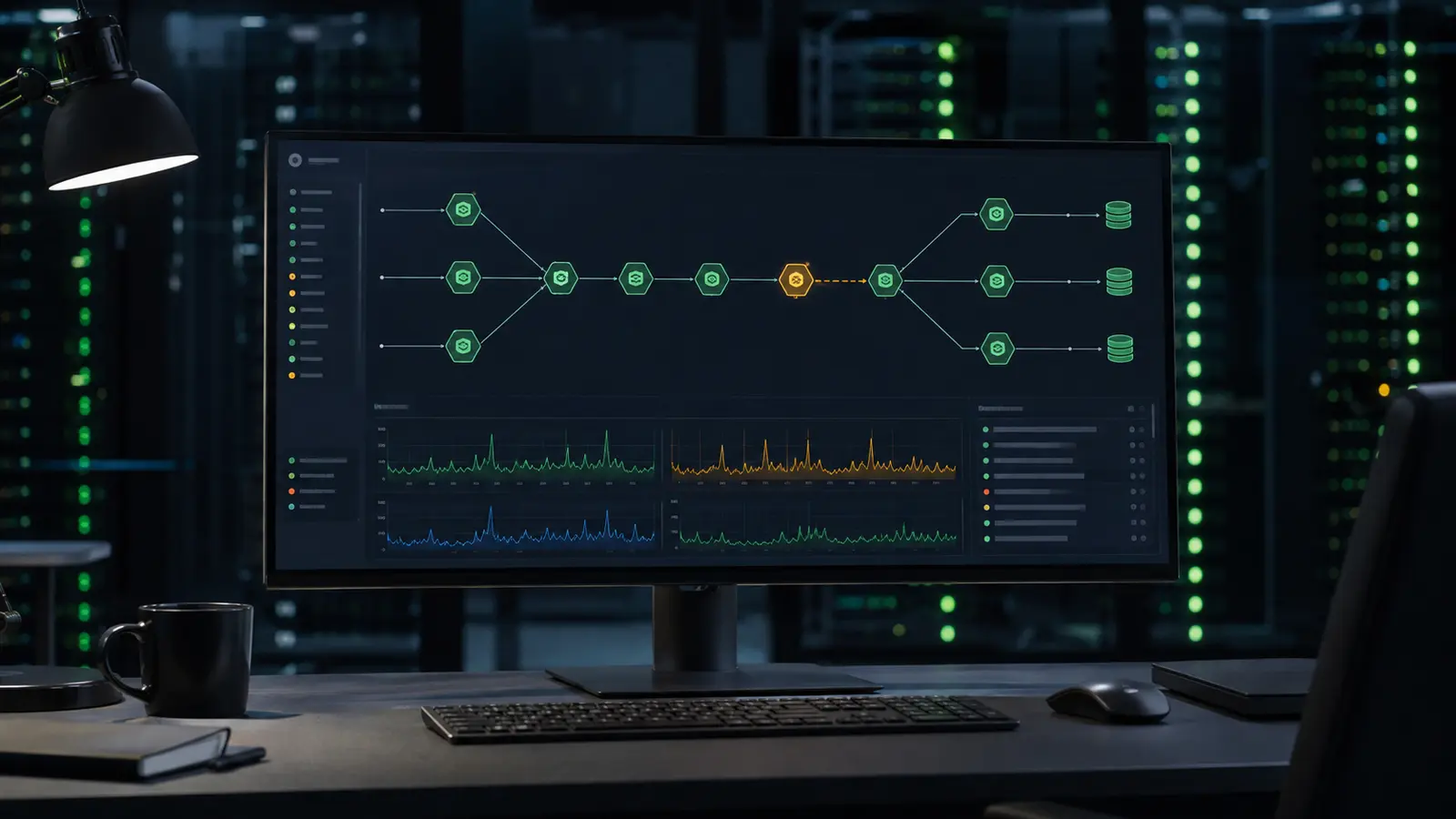
Build A Timeline Across The Request Path
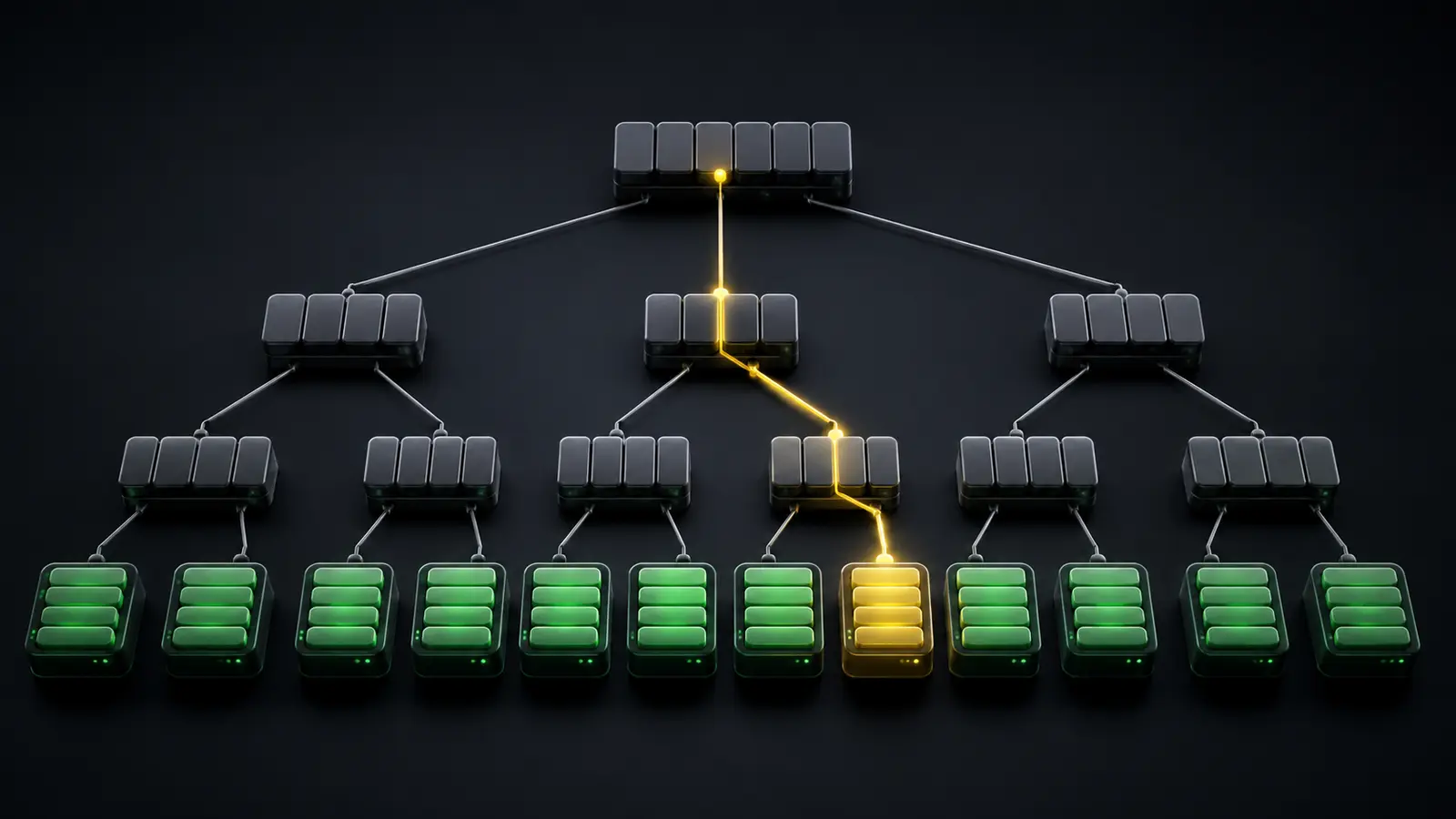
Start with a failing user action and a correlation identifier. Follow it through gateway, application, queue, database, and dependencies. Compare a failed request with a successful one from the same period. Check releases, configuration, traffic shape, schema changes, and dependency status around the first confirmed failure.
Logs explain discrete events, metrics reveal trends and saturation, and traces show where time or errors accumulate. None is complete alone. A database plan may expose a sudden scan, while the index guide helps determine whether the structure fits the query.
Test One Hypothesis At A Time
Write a falsifiable statement: requests with an empty region field take the new validation path and exhaust workers. Identify evidence that would support or reject it. Query a bounded sample, reproduce with sanitized input, or compare versions. Avoid changing several variables simultaneously.
Use production-like conditions when safe. A bug that depends on concurrency, data volume, or timeout behavior may not appear on a developer laptop. Load tests, replay in an isolated environment, and fault injection can expose the condition without experimenting on users.
Keep code changes narrow. The maintainability practices help isolate behavior and add a regression test at the stable boundary. If the incident crosses services, apply the timeout and retry evidence from API reliability.
Release The Fix With A Safety Plan
Review the change against the failure mechanism, not merely the symptom. Define success metrics and rollback conditions. Deploy to a small percentage or controlled environment, observe both the target metric and adjacent signals, then expand. Watch long enough to include the triggering traffic or scheduled job.
| Stage | Question | Evidence |
|---|---|---|
| Contain | Is user impact falling? | Error and completion rates |
| Diagnose | What changed on failing paths? | Timeline, trace, diff |
| Verify | Does the hypothesis reproduce? | Controlled test |
| Release | Is the fix safe at scale? | Canary and rollback thresholds |
| Learn | What system change prevents recurrence? | Owned actions |
Run A Blameless Learning Review
A postmortem should explain impact, timeline, contributing conditions, detection, response, and recovery. “Human error” stops too early. Ask why the action was reasonable with the information, tools, and incentives present. Then improve defaults, tests, review, observability, or containment.
Actions need owners and measurable completion. “Be more careful” is not an engineering control. A useful action might validate configuration before deployment, add an idempotency test, bound a queue, or alert on a user-facing objective. Track whether the action reduces recurrence or detection time.
Architecture can amplify incidents. If one deployment affects everything, review module isolation; if a service chain obscures ownership, reconsider boundaries using the architecture tradeoff. The purpose is not to eliminate every failure, but to make the system safer and the next response faster.
Practice Before The Next Incident
Run a short exercise around a realistic failure such as an unavailable dependency, expired credential, or overloaded queue. Confirm that responders can find dashboards, identify the owner, use rollback tools, and communicate status. The purpose is to test the response system, not to surprise individuals.
Keep runbooks focused on decisions and verified commands. Include prerequisites, expected output, stop conditions, and escalation paths. Review them after real incidents and platform changes. A runbook that has never been exercised can create false confidence when time and attention are limited.
Close the incident only after temporary controls have an explicit disposition. Emergency capacity, disabled checks, or manual workarounds can silently become permanent risk. Assign an owner to remove or formalize each one, verify the normal path, and communicate the restored state.
Confirm the evidence remains discoverable for future responders and reviewers.
Common Production Debugging Questions
Should We Fix First Or Investigate First?
Reduce harm first when a safe containment exists, while preserving evidence. Deep investigation can continue after the system is stable.
How Much Should We Log?
Enough to reconstruct important journeys and decisions without exposing secrets or overwhelming storage. Structured, sampled, correlated events are more useful than unrestricted text.
Who Should Write The Postmortem?
People closest to the response should contribute, with an owner who creates a coherent account. The review should include teams capable of changing the contributing systems.