Real-Time Does Not Simply Mean Fast
A desktop computer may finish a calculation very quickly on average and still pause unpredictably when another service runs. That can be acceptable for editing a document. It is not acceptable when a controller must sample a motor position every millisecond or close a valve before pressure crosses a safety limit. Real-time design asks whether an operation completes before its deadline in the conditions the system is expected to face.
The important requirement is therefore bounded response. Engineers identify the triggering event, the latest acceptable completion time, and the consequence of being late. A faster processor can create more margin, but speed alone does not prove that interrupts, shared resources, memory access, or communication will behave within the bound.
Hard, Firm, And Soft Deadlines
A hard deadline cannot be missed without making the result invalid or unsafe. An airbag trigger and some protection functions are familiar examples. A firm deadline makes a late result useless, although an occasional miss may not be catastrophic. A soft deadline allows degraded quality: a delayed audio buffer may produce a click, while repeated delays make the experience unacceptable.
These labels only help when the consequence is defined. “Fast sensor response” is vague. “Read the position, calculate the command, and update the actuator within 500 microseconds for every control cycle” is testable. The same discipline improves a PID control loop, because sample timing affects how the controller sees the plant.
Tasks, Interrupts, And The Scheduler
An embedded application often separates work into tasks: acquire data, update control outputs, communicate, store logs, and supervise faults. A real-time operating system scheduler selects which ready task executes. In a priority-based preemptive design, a higher-priority ready task can interrupt lower-priority work. This is useful only when priorities reflect deadlines and the processor has enough capacity for the worst credible load.
Interrupt service routines should usually capture time-critical information, clear the hardware condition, and defer longer processing. Excessive work inside an interrupt delays other interrupts and makes response harder to analyze. Shared data also needs careful synchronization. A low-priority task holding a lock can block a higher-priority task, creating priority inversion unless the design or operating system provides an appropriate mitigation.
Not every project needs an operating system. A small cyclic executive or event loop can be easier to understand and verify. The first microcontroller project guide begins with that simpler model. Add concurrency when independent timing requirements make it useful, not because multiple tasks look more advanced.
Account For Latency, Jitter, And Worst-Case Work
Interrupt latency is the delay between an event and the start of its handler. Dispatch latency is the time needed to make the selected task run. Execution time is the work inside the task, and blocking time comes from resources or communication. Jitter is variation in when a periodic action occurs. Each term describes a different place where timing margin can disappear.
Worst-case execution time is difficult because caches, flash wait states, branches, bus contention, and device drivers can change duration. Engineers combine code inspection, platform knowledge, measurement, and conservative assumptions. They also include the paths that happen rarely: error recovery, full buffers, checksum failures, and simultaneous communication events.
| Timing risk | Evidence | Design response |
|---|---|---|
| Long interrupt | Pin trace or interrupt profiler | Defer noncritical work |
| Priority inversion | Blocked high-priority task trace | Shorten locking or use a suitable protocol |
| Periodic jitter | Timestamp distribution | Remove variable blocking paths |
| Overload | Deadline misses under stress | Reduce work, rate, or feature set |
Design So Timing Can Be Demonstrated
Begin with a timing budget. Divide the end-to-end deadline among sensing, computation, actuation, and communication. Assign each task a period or event trigger, deadline, priority, and worst-case estimate. Include margin rather than using every available microsecond on paper.
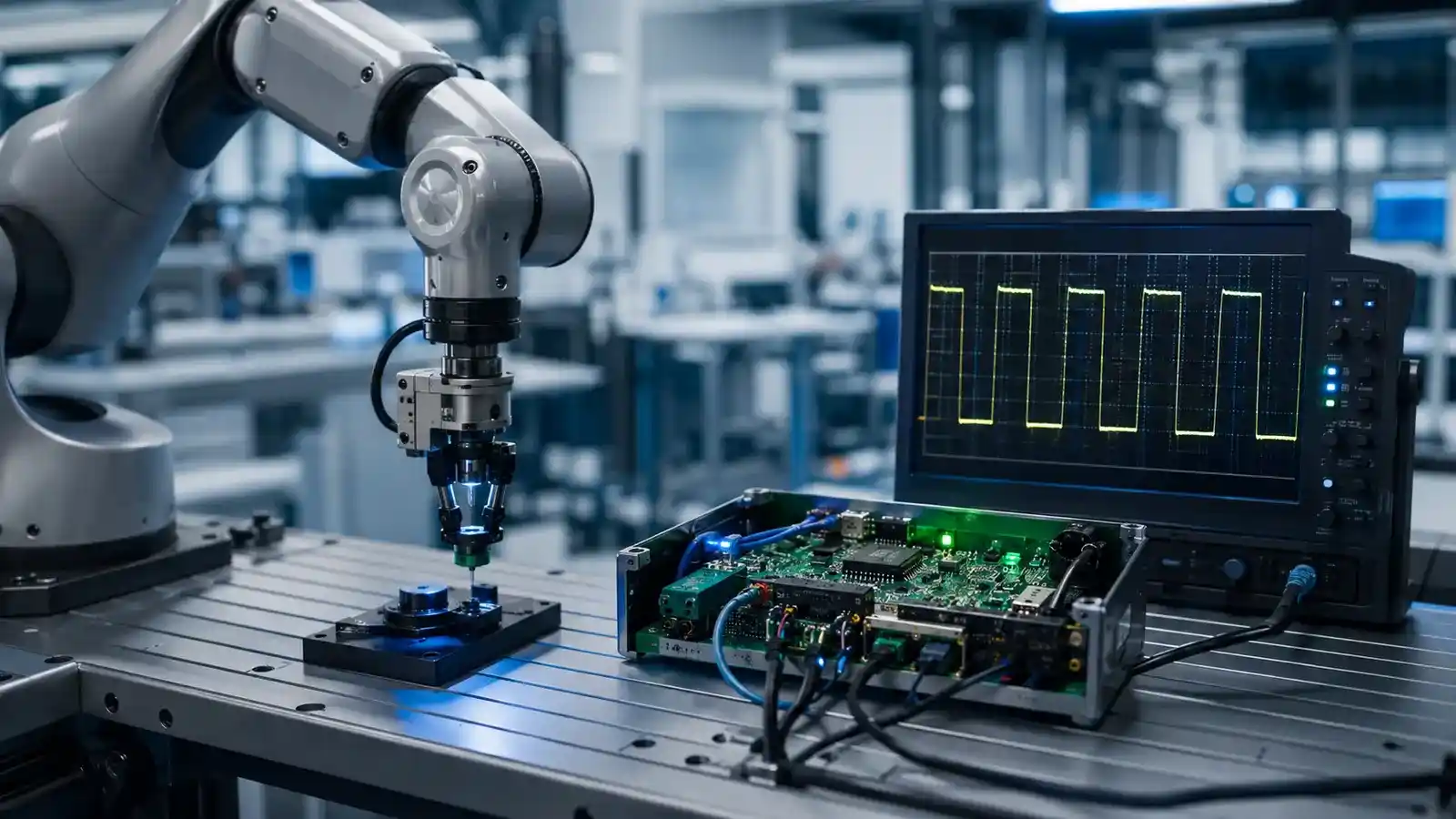
Then instrument the system. Toggle a test pin around critical code, capture timestamps in a bounded trace buffer, or use processor trace features. Test with maximum input rate, communication load, temperature range, and error conditions. A debugger that halts the processor can change the behavior, so combine software traces with external measurements when timing is critical.
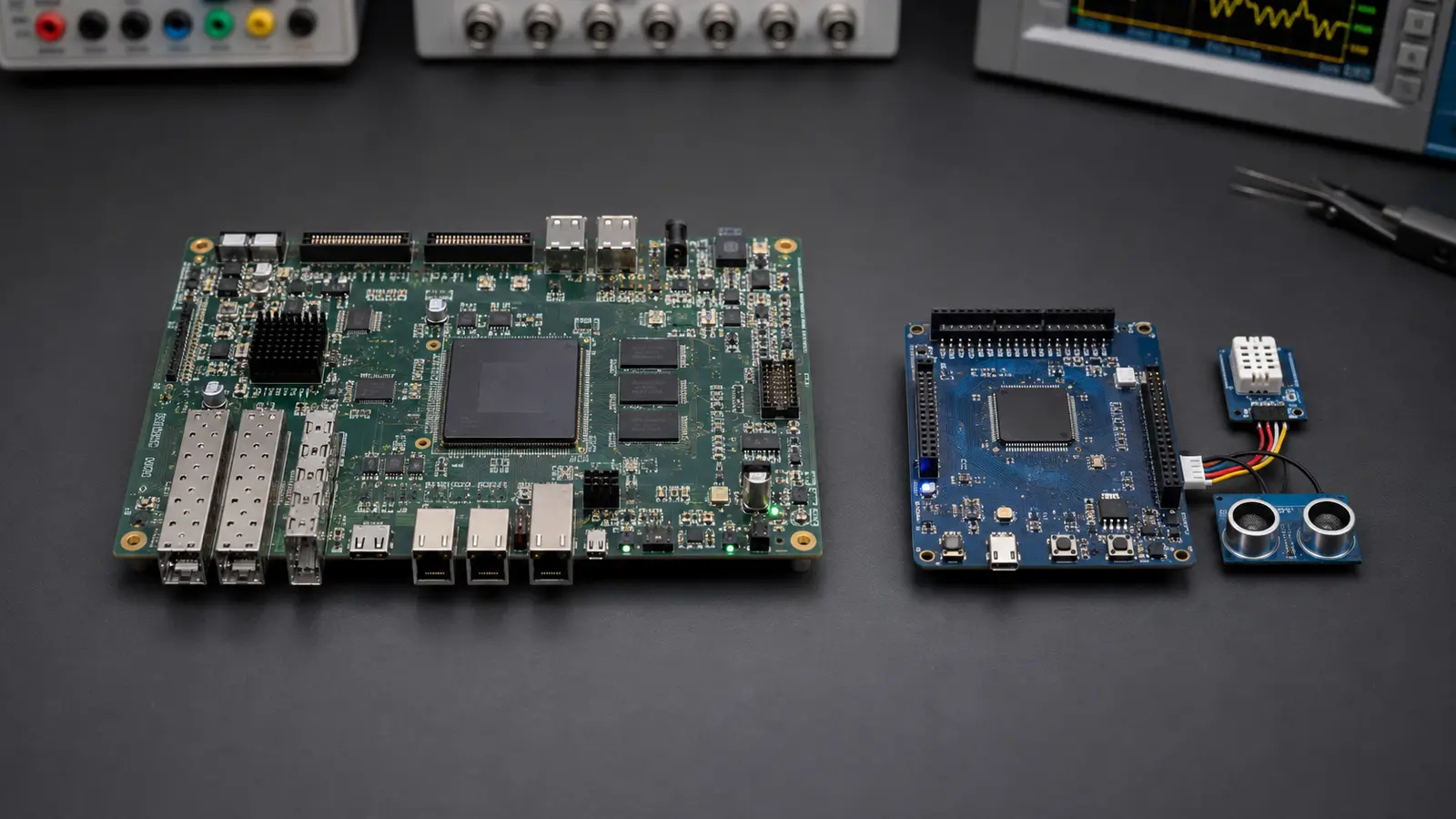
Distributed systems require explicit timeout and recovery behavior. A field device should not wait forever for a cloud response. The local function may need to continue with a safe fallback while the IoT network buffers or retries data. If the workload is dominated by tightly parallel digital pipelines, compare a processor with an FPGA implementation rather than forcing every operation into sequential software.
Common Real-Time Questions
Does An RTOS Make A Product Real-Time?
No. An RTOS provides scheduling and synchronization mechanisms, but the application still needs correct priorities, bounded execution, adequate capacity, and verified deadlines.
Is Linux A Real-Time Operating System?
General-purpose Linux prioritizes throughput and fairness, while real-time configurations and patches can improve determinism for suitable workloads. The correct choice depends on the required bound, hardware, drivers, and assurance process.
Can A Faster Processor Fix Deadline Misses?
It can add margin when computation is the bottleneck. It cannot automatically fix unbounded blocking, poor priority design, long interrupt masking, or a protocol that waits unpredictably.